Why Are Major Construction Companies Switching to Automated Nail Systems?
Why Are Major Construction Companies Switching to Automated Nail Systems?
The construction industry is experiencing a dramatic shift that's reshaping how buildings get built. Walk onto any major construction site today, and you'll notice something different—framers aren't swinging hammers anymore. Instead, they're wielding pneumatic nail guns firing collated nails and coil nails at speeds that would have seemed impossible a generation ago. This transition to automated fastening systems is revolutionizing productivity, but it's also creating new demands for fastener quality and consistency. Let's explore why this shift is happening and what it means for choosing the right nail supplier.
The Productivity Revolution: Speed That Changes Everything
Traditional hand-nailing involves picking up individual nails, positioning them, and driving them with multiple hammer strikes. An experienced framer might drive 10-12 nails per minute working at full speed—exhausting pace that's impossible to maintain for eight hours.
Compare that to pneumatic nail guns using collated nails or coil nails: 40-60 fasteners per minute, all day long, with minimal physical fatigue. The math is staggering. A framing crew using automated systems can complete in one day what would take three days with traditional methods. For construction companies managing tight schedules and labor costs, this productivity multiplication isn't a luxury—it's a competitive necessity.
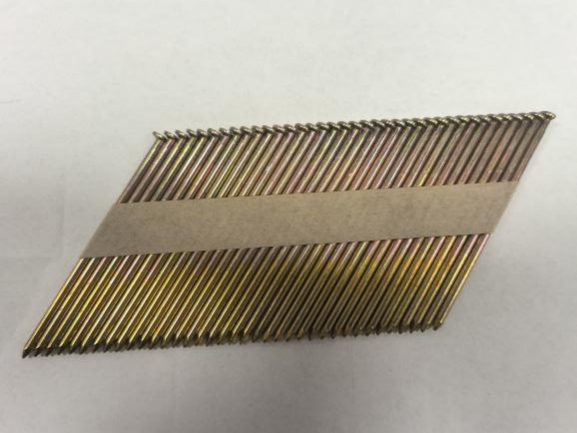
But here's the critical point most people miss: these productivity gains only materialize with fasteners specifically engineered for automated systems. Standard construction iron nails won't work. You need collated nails with precise spacing, consistent angle, and proper collation strength. Feed inferior fasteners into nail guns, and you get constant jams, misfires, and downtime that destroys the productivity advantage.
This is exactly why major construction companies partnering with Fujian Cixing Metal Products Co., Ltd. report such dramatic efficiency improvements. Our collated nails and coil nails are manufactured on precision automated equipment specifically designed for flawless pneumatic tool compatibility. When your nail gun runs smoothly all day without jamming, labor productivity soars.
Labor Shortage Solutions: Doing More with Fewer Workers
Construction industries worldwide face the same challenge: experienced workers are retiring faster than new workers are entering the trades. This labor shortage drives up wages and makes project scheduling increasingly difficult. Automated nail systems help address this crisis by enabling smaller crews to accomplish more work.
A framing crew of four workers using pneumatic systems can match the output of six or seven traditional hand-nailers. This doesn't just save labor costs—it makes projects feasible that might otherwise be impossible due to worker availability. During peak construction seasons when skilled labor is scarce, productivity multipliers become the difference between winning and losing bids.
The transition also makes training easier. Teaching someone to operate a nail gun effectively takes days or weeks, compared to months or years developing expert hand-nailing technique. This accelerated training capability helps construction companies onboard workers faster, addressing another dimension of the labor shortage challenge.
For Cixing customers, we understand that our steel nails and construction iron nails aren't just materials—they're productivity tools enabling construction companies to overcome fundamental business challenges. That's why we invest continuously in manufacturing quality and consistency supporting automated systems.
Safety Improvements: Reducing Injuries and Workers' Compensation Costs
Construction remains one of the most dangerous industries, and repetitive motion injuries from hand-nailing represent significant workers' compensation costs. Carpal tunnel syndrome, tennis elbow, shoulder injuries—these conditions sideline experienced workers and create ongoing medical expenses.
Pneumatic nail guns dramatically reduce these repetitive stress injuries. Workers aren't swinging hammers thousands of times daily, stressing joints and tendons. They're guiding lightweight tools that do the driving work mechanically. The physical demand decreases substantially while productivity increases.
Additionally, modern nail gun safety features—sequential firing triggers, contact safety mechanisms, anti-double-fire systems—prevent many accidental discharge injuries that plagued earlier pneumatic tools. When combined with proper training and quality collated nails that feed reliably without jamming, automated systems create safer work environments.
Construction companies tracking workers' compensation costs and safety incident rates report measurable improvements after transitioning to automated fastening systems. For operations managing hundreds of workers across multiple job sites, these safety gains translate directly to reduced insurance premiums and fewer lost-time injuries.
Quality Consistency: Why Automation Delivers Better Results
Here's an advantage often overlooked: automated nail systems deliver more consistent results than hand-nailing. Every fastener gets driven to the same depth with the same force. Connections achieve uniform quality regardless of worker fatigue or experience level.
This consistency matters tremendously for structural integrity. Engineers design buildings assuming fasteners will be installed correctly—proper penetration depth, correct angle, adequate spacing. Hand-nailing introduces variability: some nails overdriven and splitting wood, others underdriven and protruding, spacing irregular depending on worker judgment.
Pneumatic systems using quality coil nails or collated nails eliminate most of this variability. Depth settings ensure consistent penetration. Sequential firing prevents double-strikes. The result? Structural connections that perform as engineered, not just approximately.
Building inspectors increasingly expect this consistency. In markets with rigorous inspection standards, automated systems help contractors pass inspections reliably without callbacks for corrections. This quality advantage compounds over large projects where thousands of connections must meet specifications.
The Fastener Quality Imperative: Why Cheap Nails Destroy Automation Benefits
Here's where many construction companies make costly mistakes: they invest in quality pneumatic nail guns but then try to save money buying cheap collated nails or coil nails from questionable suppliers. The result? Constant equipment jams, misfires, damaged feed mechanisms, and frustrated crews.
Automated nail systems demand fasteners manufactured to precise specifications:
Dimensional Consistency - Shank diameter, length, and head size must stay within tight tolerances or feeding problems occur
Collation Quality - Spacing between nails, collation angle, and strip or coil integrity must be perfect for reliable feeding
Material Uniformity - Steel hardness and point geometry must be consistent so every nail drives identically
Quality Control - Defective nails must be caught before packaging, not discovered on job sites when they jam expensive equipment
Cixing's investment in Danish nail-making machines, German coil nail production systems, and automated vision inspection exists specifically to meet these demanding requirements. Our construction iron nails and steel nails work flawlessly in automated systems because we control every manufacturing variable affecting performance.
Construction companies that learned this lesson the hard way—after experiencing downtime from inferior fasteners—become Cixing customers who understand that fastener quality isn't where you save money. It's where you protect the productivity investments that automated systems represent.
Making the Transition: How to Switch to Automated Systems Successfully
For construction companies still using traditional hand-nailing, transitioning to automated systems requires thoughtful planning:
Equipment Selection - Different nail guns suit different applications: framing nailers for structural work, finish nailers for trim, roofing nailers for shingles
Fastener Matching - Tools and fasteners must be compatible: coil capacity, collation type, shank specifications
Worker Training - Proper technique, safety protocols, and maintenance procedures ensure safe, effective operation
Supplier Partnership - Reliable fastener suppliers providing consistent quality and technical support
Process Adjustment - Work sequences may change when productivity increases dramatically
Cixing supports customers through these transitions by providing technical consultation on fastener selection, product samples for equipment compatibility testing, and responsive customer service addressing questions during implementation.
Contact Cixing: Partner for Your Automation Success
Whether you're a construction company planning to adopt automated nail systems, a contractor already using pneumatic tools but frustrated with fastener quality, or a distributor serving professional builders who demand reliability—your fastener supplier directly impacts operational success.
Connect with Fujian Cixing Metal Products Co., Ltd. to discuss:
✓ Collated nails and coil nails specifically engineered for your nail gun models
✓ Technical specifications ensuring compatibility with your equipment
✓ Product samples for testing before committing to bulk orders
✓ Reliable supply supporting your project schedules
✓ Quality documentation meeting your specifications
The construction industry's transition to automated fastening systems creates tremendous opportunities for companies choosing quality partners. Let Cixing help you maximize the productivity, safety, and quality benefits that automation promises.
Your automation success starts with fasteners that never let you down.