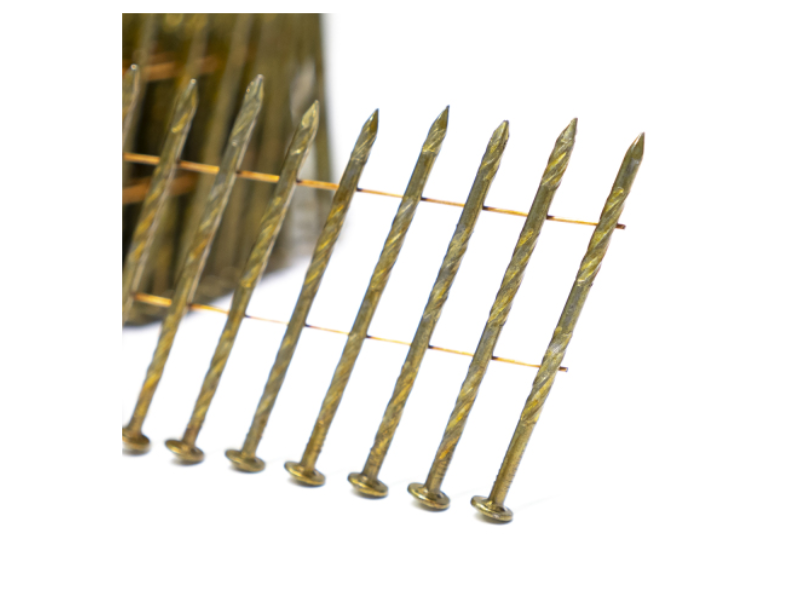
From Skyscrapers to Picture Frames: The Surprising Journey of Nails Across Industries
Ever wonder where all those nails your factory produces actually end up? As a Chinese nail manufacturer, you might ship thousands of tons annually, but the final destinations of collated nails, steel nails, coil nails, headless iron nails, and construction iron nails span an incredibly diverse range of industries and applications. Let's take a fascinating journey through the many worlds where quality fasteners make everything possible—from massive construction projects to delicate craftsmanship.
Construction Industry: Where Volume Meets Variety
Unsurprisingly, construction remains the largest consumer of manufactured nails, but the applications within this sector are remarkably diverse. Residential framing crews depend on strip-collated nails and coil nails for rapid pneumatic installation—a single home might require 20,000+ fasteners. Commercial builders use specialized construction iron nails for structural connections that must meet engineering specifications and building code requirements.
Concrete contractors need specific nails for formwork assembly and stripping. Roofing companies consume massive quantities of galvanized coil nails designed for weather exposure. Deck builders require corrosion-resistant fasteners that won't stain expensive hardwood materials. Drywall installers use precise collated nails that set flush without damaging paper surfaces.
For Chinese nail manufacturers serving this market, understanding these varied construction applications helps develop specialized products that command premium pricing over commodity alternatives. Professional construction companies don't just want "nails"—they want application-optimized solutions.
Furniture Manufacturing: Precision Fastening for Quality Products
The furniture industry represents a substantial market for headless iron nails, finishing nails, and specialized steel nails. High-end furniture makers require fasteners that virtually disappear in finished pieces—brad nails and pin nails that leave minimal visible marks while providing adequate holding power.
Upholstered furniture frames use specific nail types for attaching webbing and fabric. Cabinet makers need various lengths and gauges for different joints and connections. Wooden chair manufacturers require fasteners that won't split delicate spindles yet provide strength for structural connections. Even flat-pack furniture producers rely on precision-manufactured nails for assembly hardware.
Quality consistency matters enormously in furniture applications. A batch of nails with diameter variations can split expensive hardwoods, creating costly waste. Chinese nail exporters serving furniture manufacturers must maintain tight tolerances and comprehensive quality control to meet these demanding standards.
Packaging and Logistics: The Invisible Infrastructure
Most people never consider the nails holding together the wooden crates and pallets that move global commerce, yet this represents a massive market segment. Industrial packaging operations consume enormous quantities of construction iron nails for crate assembly, pallet manufacturing, and shipping container preparation.
These applications demand specific performance characteristics: sufficient strength to withstand rough handling during transportation, resistance to splitting when driven into various wood species, and consistent quality preventing assembly line slowdowns. A single large logistics company might use millions of nails monthly across their packaging operations.
For nail manufacturers, the packaging industry offers stable, high-volume demand with less price sensitivity than commodity construction markets. Companies shipping valuable machinery, electronics, or industrial equipment prioritize fastener reliability over minimal cost savings—they can't risk product damage from packaging failures.
Agricultural Applications: Fasteners Face the Elements
Agriculture might seem an unlikely nail market, but farms and agricultural operations use substantial quantities of fasteners for diverse applications. Barn construction, fence installation, livestock pen assembly, and equipment shed building all require corrosion-resistant steel nails and construction iron nails designed for outdoor exposure.
Greenhouse manufacturers need specific fasteners compatible with treated lumber and able to withstand high humidity environments. Vineyard operators use nails for trellis systems supporting valuable grape crops. Poultry and livestock facilities require galvanized or stainless fasteners resistant to ammonia and moisture—conditions that rapidly corrode standard nails.
Chinese nail manufacturers serving international agricultural markets—particularly in regions like Australia, New Zealand, and Southeast Asia—must understand these environmental challenges and offer appropriately engineered products. The agricultural sector values durability over initial cost, creating opportunities for premium-quality suppliers.
Woodworking and Crafts: Small Volumes, High Standards
Artisan woodworkers, craft professionals, and small-scale furniture makers represent a different market segment—lower volumes but extremely quality-conscious. These customers need diverse nail types in smaller quantities: tiny brad nails for delicate trim work, specialty headless iron nails for invisible joinery, and precision finishing nails for cabinetry.
While individual craftspeople purchase modest quantities, the collective market is substantial, typically served through hardware distributors and specialty woodworking suppliers. These channels value suppliers offering comprehensive product ranges in convenient packaging sizes—not just bulk industrial quantities.
For Chinese nail exporters, developing this market segment requires different approaches: smaller packaging options, broader product variety, and potentially higher per-unit margins. Professional woodworkers willingly pay premiums for consistent quality that prevents wood splitting and ensures clean installations.
Restoration and Renovation: Matching Historical Requirements
Historical building restoration and renovation projects create unique fastener demands. Restoration contractors often need nails matching historical specifications—specific head styles, lengths, and finishes that weren't manufactured for decades. Some projects require hand-forged appearance or antique finishes on modern engineered nails.
This niche market values specialized manufacturing capabilities and custom production runs. While volumes might be modest compared to construction markets, pricing reflects the specialized nature of requirements. Chinese nail manufacturers with flexible production systems can serve this segment profitably.
Additionally, general renovation work consumes substantial nail volumes as homeowners update aging properties. Contractors installing new trim, refinishing floors, or building additions need reliable sources for various collated nails, steel nails, and finishing fasteners.
Marine and Coastal Applications: Corrosion Resistance is Critical
Boat building, dock construction, coastal property development, and maritime infrastructure create demanding fastener requirements where corrosion resistance becomes paramount. Standard galvanized nails fail relatively quickly in salt air environments—these applications require stainless steel, hot-dipped galvanized, or specially coated products.
Marine-grade coil nails and construction iron nails command significant price premiums but represent essential investments for applications where fastener failure means catastrophic damage. A collapsed dock or deteriorating boat structure creates safety hazards and expensive repairs far exceeding initial fastener costs.
Chinese nail manufacturers serving coastal markets worldwide—from Australia's coastal cities to North American harbors—must maintain specialized product lines meeting these corrosion resistance requirements and provide appropriate documentation for marine applications.
The Manufacturing Advantage: Serving Diverse Markets from One Facility
Modern Chinese nail factories with comprehensive production capabilities and diverse product lines can serve all these markets simultaneously—from high-volume construction collated nails to specialized marine-grade fasteners. This diversification provides business stability, reduces dependence on single market segments, and maximizes production facility utilization.
The key lies in maintaining manufacturing flexibility, comprehensive quality systems, and customer-focused service supporting each segment's unique requirements. Whether shipping container loads of construction iron nails to commercial builders or smaller quantities of precision headless iron nails to furniture makers, professional manufacturers adapt to customer needs while maintaining consistent quality.
For B2B buyers across these diverse industries, partnering with established Chinese nail suppliers offering broad capabilities, reliable quality, and responsive service creates competitive advantages in their own markets.