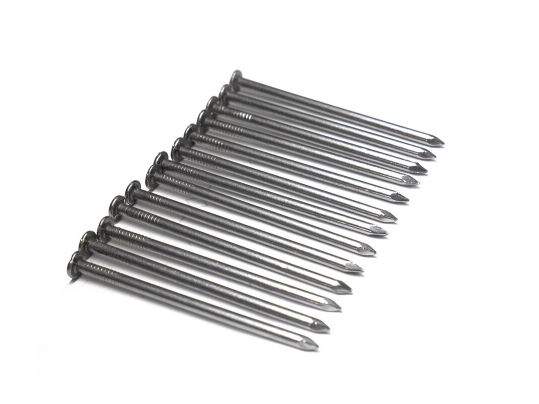
Steel vs. Stainless vs. Galvanized: Choosing the Right Nail Material for Your Project
Most people assume all nails are essentially the same—just metal fasteners driven into wood or other materials. But the reality is far more nuanced. The material composition of a nail profoundly affects its strength, corrosion resistance, cost, and suitability for specific applications. A nail that performs beautifully in one environment can fail miserably in another, simply because the material isn't appropriate for those conditions. Let's examine the different nail materials available, compare their characteristics, and explore which applications each serves best.
Carbon Steel: The Workhorse of Construction
Carbon steel nails represent the industry standard—what most construction crews use for general-purpose framing, interior work, and applications where corrosion isn't a primary concern. These nails contain primarily iron with 0.5-1.2% carbon content, creating the hardness needed for driving into tough materials while maintaining adequate toughness preventing brittleness.
Advantages of Carbon Steel Nails:
- Superior strength and hardness allowing deep penetration into dense materials
- Cost-effective compared to specialty materials
- Excellent for high-speed pneumatic application in collated nail and coil nail formats
- Wide availability and established supply chains
- Proven performance across countless applications
Limitations:
- Zero corrosion resistance—uncoated carbon steel rusts rapidly when exposed to moisture
- Surface rust can develop even in moderately humid indoor environments
- Not suitable for marine, coastal, or outdoor applications without protective coating
- Can stain light-colored wood if moisture allows rust development
Best Applications:
- Interior framing and structural work
- Drywall installation
- Subflooring in dry environments
- Interior trim and millwork
- High-speed automated assembly lines where cost matters
At Fujian Cixing Metal Products Co., Ltd., our carbon steel construction iron nails and steel nails form the backbone of our product line. We serve construction companies worldwide with precisely engineered fasteners optimized for these standard applications. When quality carbon steel performs properly, nothing else is needed—saving customers money while delivering excellent results.
Galvanized Steel: Corrosion Protection for Outdoor Work
Galvanized steel nails feature a protective zinc coating applied through hot-dip or electro-galvanizing processes. This coating acts as a sacrificial barrier, protecting the underlying steel from rust development even when exposed to moisture and weather. The zinc corrodes preferentially to steel, extending fastener lifespan dramatically.
Advantages of Galvanized Nails:
- Excellent corrosion resistance for outdoor applications
- Coating prevents rust staining on wood surfaces
- Maintains structural integrity through years of weather exposure
- Available in various coating weights for different exposure levels
- Cost-effective protection compared to premium materials
- Wide availability across all fastener types
Limitations:
- Coating slightly increases fastener diameter, potentially causing wood splitting
- Galvanizing process can create rough surface texture
- Very heavy coatings for severe marine environments add significant cost
- Lighter electro-galvanized coatings provide less protection than hot-dip
- Zinc coating can eventually deplete in extremely aggressive environments
Best Applications:
- Exterior decking and outdoor construction
- Roofing and siding installation
- Fence building and agricultural structures
- Concrete formwork subjected to moisture
- Coastal or humid climate construction (light to moderate exposure)
Cixing's galvanized coil nails and construction iron nails serve contractors worldwide building outdoor structures. Our hot-dip galvanizing process applies coating thicknesses meeting international standards for various exposure classifications. When builders in Australia's coastal regions, Southeast Asian monsoon climates, or European maritime zones specify Cixing galvanized products, they're getting protection engineered for genuine environmental challenges.
Stainless Steel: Premium Protection for Extreme Environments
Stainless steel nails contain chromium (minimum 10.5%) and often nickel, creating a fundamentally different corrosion resistance mechanism than galvanized steel. Rather than sacrificial zinc coating, the chromium forms a protective oxide layer on the surface that continuously self-heals when scratched. This makes stainless steel virtually corrosion-proof in most environments.
Advantages of Stainless Steel Nails:
- Superior corrosion resistance approaching absolute—suitable for marine and chemical environments
- No coating degradation over time like galvanized products
- Won't stain surrounding materials regardless of moisture exposure
- Suitable for high-chloride environments where galvanizing fails
- Long-term cost value despite higher initial price
- Aesthetic appeal in visible applications
Limitations:
- Significantly higher cost—typically 3-5x more expensive than carbon steel
- Lower hardness than carbon steel, making penetration into dense materials more difficult
- Requires precise drilling for installation in some applications
- Limited availability compared to standard materials
- Overkill for applications where galvanized protection suffices
- Special consideration needed in high-stress structural applications
Best Applications:
- Coastal and marine construction—docks, boat structures, seaside facilities
- Swimming pool and spa construction where chlorine causes aggressive corrosion
- Chemical processing facilities with corrosive atmospheres
- Food processing plants requiring hygiene and corrosion resistance
- Historical restoration requiring invisible fastening
- High-end outdoor architectural features where appearance matters
Cixing produces stainless steel construction iron nails and specialized fasteners for these demanding applications. While volume is modest compared to standard nails, the premium pricing and technical requirements make these products valuable for serving customers with extreme environmental conditions.
Hot-Dip Galvanized vs. Electro-Galvanized: Understanding the Difference
Within the galvanized category, two primary coating methods exist, and the distinction matters for performance:
Hot-Dip Galvanizing:
- Fastener immersed in molten zinc (around 840°F), creating thick protective coating
- Coating thickness typically 45-100+ microns depending on immersion time
- Provides superior protection for severe exposures
- Creates distinctive crystalline surface pattern
- Most expensive galvanizing method but best protection
- Optimal for truly outdoor applications
Electro-Galvanizing:
- Zinc applied electrochemically, creating thinner, more uniform coating
- Coating thickness typically 5-25 microns
- Smoother, more uniform appearance
- Better suited for aesthetic applications and interior use with moisture concerns
- Lower cost than hot-dip but less protection for harsh exposures
- Adequate for moderate-exposure applications
For contractors, the choice depends on expected exposure. Interior applications with humidity concerns or mild outdoor exposures work fine with electro-galvanized collated nails and construction iron nails. Severe coastal, tropical, or industrial chemical environments demand hot-dip galvanized products that provide truly long-term protection.
Cixing manufactures both coating types, helping customers select appropriate specifications for their actual exposure conditions—not automatically upgrading to expensive hot-dip when less aggressive coatings suffice.
Specialty Materials: Brass and Copper Fasteners
Beyond steel and stainless, specialized materials serve unique applications:
Brass Nails:
- Composed of copper and zinc, brass is inherently corrosion-resistant
- Won't stain or discolor surrounding materials
- Suitable for finished woodwork, decorative applications, and antique restoration
- Lower strength than steel—unsuitable for structural applications
- Significant cost premium limits use to specialty applications
- Often selected for appearance rather than purely functional reasons
Copper Fasteners:
- Similar corrosion resistance to brass but softer
- Primarily used in marine applications and high-end restoration work
- Cost and strength limitations restrict applications
- Often specified more for compatibility with copper roofing or architectural details
These specialty materials represent small market segments where appearance, compatibility, or historical accuracy outweigh cost and strength concerns. Cixing manufactures these specialty products for customers with specific requirements, though volume remains modest compared to steel alternatives.
Performance Comparison Chart: Material Characteristics at a Glance
| Material | Strength | Corrosion Resistance | Cost | Best Use | Worst Use |
|---|---|---|---|---|---|
| Carbon Steel | Excellent | Poor | Low | Interior framing | Outdoor exposure |
| Galvanized Steel | Excellent | Good | Moderate | Outdoor construction | Marine environments |
| Stainless Steel | Good | Excellent | High | Coastal/marine | High-stress framing |
| Brass | Fair | Excellent | High | Decorative/restoration | Structural load |
| Copper | Fair | Excellent | High | Marine/restoration | Structural load |
Making Smart Material Selection Decisions
Choosing appropriate nail materials requires honest assessment of actual service conditions:
Environmental Assessment:
- Indoor, dry environment → Carbon steel is appropriate and economical
- Outdoor with seasonal moisture → Galvanized steel provides necessary protection
- Coastal or marine → Hot-dip galvanized or stainless becomes essential
- Chemical exposure → Stainless steel may be mandatory for safety
- Historical accuracy → Specialty materials might be specified
Structural Requirements:
- Load-bearing applications → Carbon or galvanized steel provides necessary strength
- Decorative applications → Specialty materials acceptable if corrosion-protected
- Hidden fastening → Any material works if corrosion-appropriate for environment
- Visible fastening → Consider aesthetic impact of fastener appearance
Economic Considerations:
- Cost-sensitive projects → Galvanized steel balances protection and expense
- Premium projects → Stainless or specialty materials justified for longevity and appearance
- Large-volume applications → Carbon steel economies of scale dominate
- Long-term ownership → Premium materials justify higher initial cost
Contact Cixing: Material Expertise for Your Applications
Fujian Cixing Metal Products Co., Ltd. manufactures comprehensive product lines across material types, enabling us to recommend optimal solutions for whatever your project demands. Whether you need cost-effective carbon steel construction iron nails for interior framing, durable galvanized coil nails for roofing, premium stainless steel fasteners for coastal marine work, or specialty materials for restoration projects—we have the expertise and capabilities to serve you.
Connect with our technical team to discuss:
✓ Your specific application conditions and environmental exposure
✓ Structural and load requirements for fasteners
✓ Material options balancing performance with budget
✓ Product samples for testing in your actual conditions
✓ Technical specifications and quality documentation
✓ Reliable supply for your project requirements
The construction and industrial fastener industries have learned through experience that material selection directly impacts project success, longevity, and total cost of ownership. Let Cixing help you choose the right materials for your applications.
The right nail material for your project isn't always the most expensive—it's the one engineered for your actual conditions.