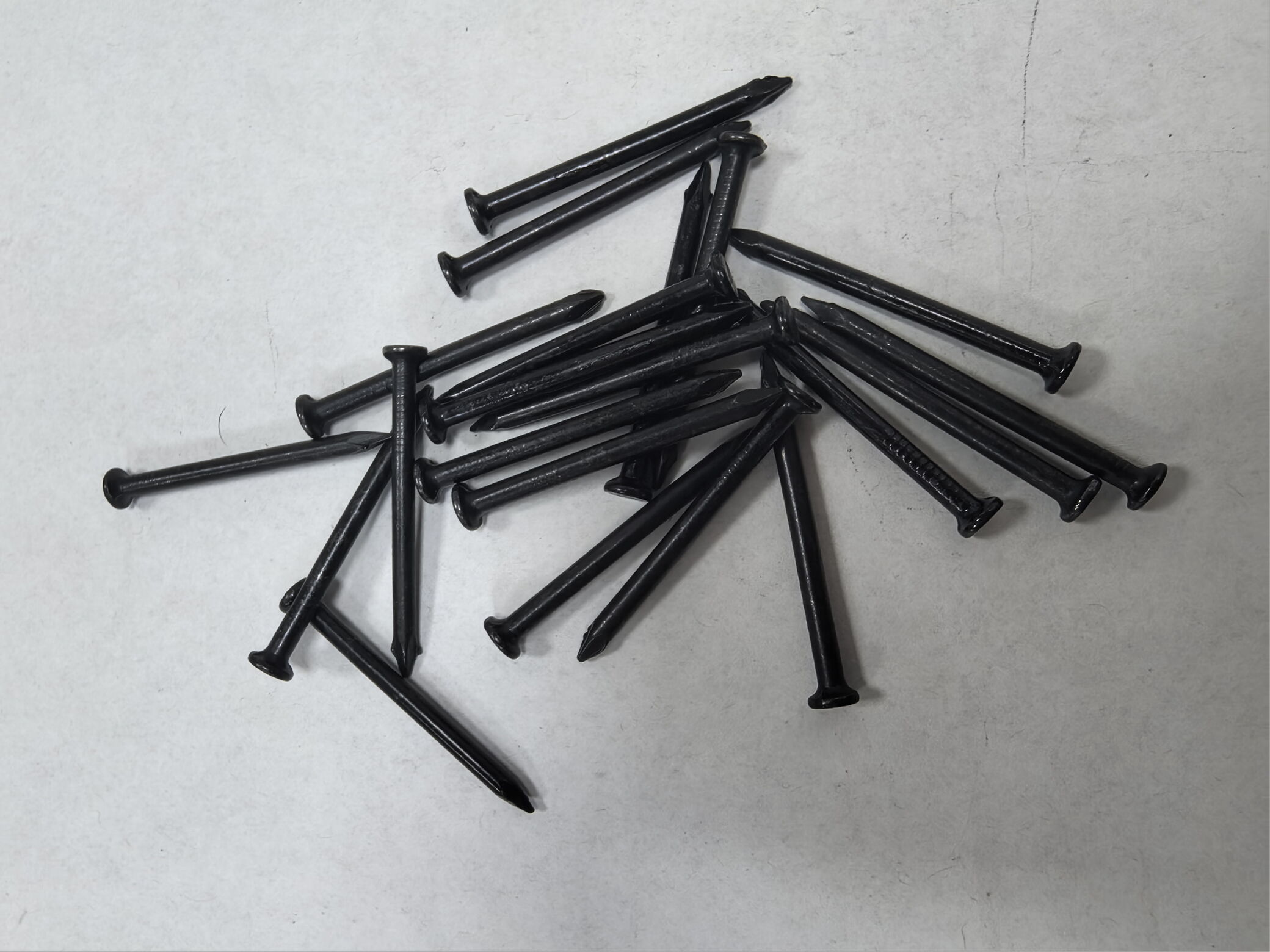
How to Check Nail Quality: A Quick Guide for Buyers
Receiving a shipment of nails from your supplier should be straightforward—but how do you actually know if those fasteners meet your quality standards? Many contractors and distributors simply assume the nails will perform as expected, only to discover problems when installations encounter bent fasteners, equipment jams, or premature rust. Let's explore simple, practical methods for verifying nail quality before they reach job sites.
Visual Inspection: What to Look For
Start with basic visual examination—it catches obvious defects immediately:
Surface Finish - Quality nails should have smooth, consistent coating or finish with no rough spots, burrs, or irregularities. Run your finger along the shank; it should be smooth, not ragged. Pitting, rust spots, or uneven galvanizing indicates manufacturing problems.
Point Formation - Examine the nail point under good lighting. It should be sharp, symmetrical, and cleanly formed—not blunt, bent, or irregular. Poor point geometry signals low-quality production or damaged fasteners.
Shank Straightness - Place nails on a flat surface and examine from the side. They should lie perfectly flat, not curved or bent. Even slight bending indicates material problems or production defects.
Head Uniformity - If applicable (construction iron nails, finishing nails), inspect head size and shape. Heads should be consistent across all fasteners in the batch, properly formed, and not oversized or undersized.
Collation Quality (for collated nails) - Check strip spacing, angle consistency, and collation material integrity. Nails should be evenly spaced at consistent angles with no damaged strips or broken collation points.
This visual inspection takes minutes but catches many quality problems before they reach job sites.
Basic Strength Testing: Simple Checks You Can Do
While comprehensive metallurgical testing requires laboratory equipment, simple strength checks reveal obvious problems:
Hardness Assessment - Attempt to deform a nail by hand pressure or with a bench vise. Quality nails should resist bending when moderate force is applied. Nails that bend easily indicate insufficient hardness—a sign of poor metallurgy or inadequate heat treatment.
Point Penetration Test - Try driving a nail into a scrap piece of hardwood. Quality fasteners should penetrate with reasonable hammer force without bending. Nails that bend repeatedly or refuse to penetrate indicate metallurgical defects.
Breaking Strength - Place a nail in a vise and apply increasing lateral force until it breaks or bends. Quality construction iron nails should require substantial force before failure. Nails breaking easily or bending excessively suggest weak material.
These informal tests won't replace professional testing, but they quickly reveal whether fasteners are in the general ballpark of acceptable quality.
Request Documentation: What to Ask Suppliers
Professional-grade nails should come with quality documentation. If your supplier can't provide it, that's a red flag:
Material Certificates - Request documentation confirming steel grade, chemical composition, and mechanical properties from the material supplier
Test Reports - Ask for batch testing results showing tensile strength, hardness, dimensional accuracy, and coating thickness measurements
Quality Certifications - Verify that suppliers maintain ISO certifications or other quality management system credentials
Batch Traceability - Ensure products are coded for traceability, enabling correlation between shipments and quality documentation if problems arise
Reputable manufacturers like Fujian Cixing Metal Products Co., Ltd. provide this documentation routinely. If your current supplier hesitates or claims it's unnecessary, consider sourcing from quality-focused manufacturers who take documentation seriously.
Performance Testing: Real-World Verification
The ultimate test occurs when fasteners perform in actual applications:
Nail Gun Compatibility - Feed collated nails through your equipment. They should load smoothly, feed without jamming, and fire reliably. Consistent problems indicate dimensional inconsistency or collation quality issues.
Installation Ease - Drive fasteners into your typical materials. They should penetrate smoothly without bending or requiring excessive force. Repeated bending suggests inadequate hardness.
Corrosion Resistance - For outdoor applications, expose sample nails to accelerated corrosion testing or simply monitor actual installations. Quality galvanized products should show no rust after months or years of exposure.
Holding Power - Inspect installations months after completion. Connections should remain tight without loosening, indicating adequate metallurgy and shank design.
These real-world tests confirm that fasteners deliver promised performance.
Supplier Reliability: The Best Quality Assurance
Here's an important reality: the best quality assurance comes from partnering with manufacturers committed to consistency. Instead of testing every shipment, build relationships with suppliers whose systems and reputation guarantee quality.
Red Flags for Unreliable Suppliers:
- Unable or unwilling to provide quality documentation
- Pricing significantly below market standards (suggesting corners being cut)
- No certifications or quality management systems
- Inconsistent product quality across batches
- Defensive responses when asking about quality controls
Green Flags for Trustworthy Suppliers:
- Comprehensive quality documentation provided routinely
- Competitive pricing reflecting genuine manufacturing excellence, not corner-cutting
- Multiple certifications (ISO, industry-specific standards)
- Consistent batch quality over time
- Proactive communication about quality and technical support
Cixing serves customers globally because our manufacturing systems, quality documentation, and technical expertise provide assurance that fasteners will perform as specified. When you work with quality-focused manufacturers, you can rely on consistent performance rather than requiring constant verification.
Take Action: Audit Your Current Suppliers
If you're not completely confident in your current nail suppliers' quality, take these steps:
✓ Request quality documentation - See if they respond with comprehensive information or excuses
✓ Conduct visual inspections - Examine nails from current shipments using the standards described
✓ Perform simple strength tests - Verify that fasteners meet basic performance expectations
✓ Evaluate real-world performance - Review installations from recent projects for problems
✓ Contact Cixing for alternatives - Request samples from quality-focused manufacturers to compare
Quality fasteners aren't expensive—they're cost-effective when considering the complete picture of labor, material waste, and callbacks prevented by using reliable products.