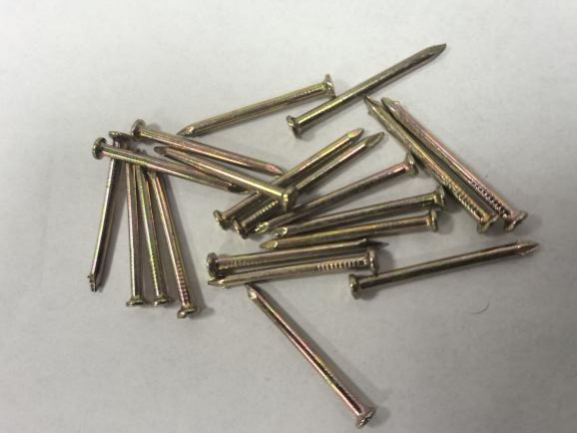
What Safety Standards Should Construction Nails Meet? A Professional Buyer's Guide
Construction site accidents and structural failures often trace back to a seemingly minor decision: choosing the wrong fasteners or using substandard nails that don't meet safety requirements. When buildings collapse, decks fail, or structures develop dangerous weaknesses, investigators frequently discover that non-compliant or inferior-quality nails played a critical role. So here's the crucial question every contractor, builder, and procurement manager must answer: what safety standards should your construction nails actually meet, and how do you verify compliance? Let's explore the standards that protect lives and projects.
Why Construction Nail Standards Exist: Safety Isn't Optional
Construction nail standards aren't bureaucratic obstacles—they're safety frameworks developed through decades of engineering analysis, failure investigations, and performance testing. These standards ensure that fasteners perform predictably under specified loads, resist environmental degradation, and maintain structural integrity throughout a building's expected lifespan.
When construction iron nails or steel nails fail to meet established standards, the consequences can be catastrophic. Structural connections weaken over time. Load-bearing capacity diminishes. Weather exposure accelerates deterioration. What seemed adequate during installation becomes dangerously inadequate years later when families occupy the building or workers depend on the structure's integrity.
Professional manufacturers like Fujian Cixing Metal Products Co., Ltd. design production processes specifically to meet or exceed international construction nail standards. This isn't coincidental—it requires substantial investment in quality materials, precision equipment, rigorous testing, and comprehensive documentation. Manufacturers cutting corners on standards are literally gambling with safety.
International Standards: Understanding Key Frameworks
Different regions maintain specific construction nail standards, but several frameworks dominate global construction markets:
ASTM Standards (American) - ASTM F1667 covers driven fasteners including nails for use with wood and wood-based materials. This comprehensive standard specifies material requirements, mechanical properties, coating specifications, and testing protocols. Construction companies working on projects in North America or following US building codes typically require ASTM-compliant fasteners.
ISO Standards (International) - ISO 8991 and related standards establish international specifications for construction nails, covering dimensions, materials, mechanical properties, and corrosion resistance. These standards facilitate global trade and provide baseline quality expectations across markets.
EN Standards (European) - European Norm standards like EN 14592 govern fasteners for timber structures, specifying performance requirements, testing methods, and quality assurance procedures. Projects in European markets or following EU building codes demand EN-compliant products.
National Standards - Countries like Australia (AS standards), Japan (JIS standards), and China (GB standards) maintain their own construction nail specifications aligned with local building practices and environmental conditions.
For B2B buyers sourcing collated nails, coil nails, or construction iron nails internationally, understanding which standards apply to your target markets is essential. Reputable Chinese nail manufacturers like Cixing maintain certifications across multiple standard frameworks, enabling them to serve diverse global markets.
Material Standards: What Steel Quality Really Means
Construction nail safety begins with material selection. Standards specify acceptable steel grades, carbon content ranges, and metallurgical properties ensuring adequate strength, ductility, and durability.
Carbon Content - Construction iron nails for structural applications typically require steel with 0.65-0.75% carbon content, providing necessary hardness without excessive brittleness. Standards specify acceptable ranges and testing methods for verification.
Tensile Strength - Minimum tensile strength requirements ensure nails can withstand design loads without failure. Standards specify testing protocols measuring ultimate tensile strength and yield strength.
Chemical Composition - Standards limit harmful elements like sulfur and phosphorus that can weaken steel or promote corrosion, while specifying beneficial alloying elements improving performance.
At Cixing, we source steel wire exclusively from certified mills providing material certifications documenting compliance with applicable standards. Every incoming wire batch undergoes verification testing before production begins—we never assume compliance, we verify it. This rigorous approach ensures our steel nails and construction iron nails consistently meet material specifications that safety depends upon.
Dimensional Standards: Precision Matters for Safety
You might think slight dimensional variations in nails are insignificant, but standards specify tight tolerances for good reasons. Undersized shanks reduce load capacity. Irregular points cause splitting that weakens connections. Inconsistent lengths affect embedment depth and holding power.
Construction nail standards establish:
Shank Diameter Tolerances - Specified ranges ensuring adequate cross-sectional area for design loads while preventing excessive size causing wood splitting
Length Specifications - Minimum and maximum lengths for each nail designation, ensuring proper penetration and embedment
Head Dimensions - Size and shape requirements providing adequate bearing surface without damaging materials
Point Geometry - Angle and formation specifications optimizing penetration while minimizing splitting
Cixing's automated production lines maintain dimensional tolerances well within standard requirements. Our precision wire drawing equipment, computer-controlled cutting systems, and automated vision inspection ensure every collated nail and coil nail meets specifications. When structures depend on fastener performance, dimensional precision isn't negotiable.
Coating Standards: Corrosion Protection Requirements
Construction nail standards specify coating requirements protecting against corrosion—critical for structural safety because rust doesn't just stain, it destroys holding power and load capacity.
Galvanizing Specifications - Standards define minimum zinc coating weights for different exposure classifications. Light-duty interior applications might require 30 g/m² coating, while severe marine environments demand 70+ g/m² hot-dip galvanizing.
Coating Adhesion - Standards specify testing methods ensuring coatings won't flake or peel under normal installation and service conditions.
Coating Uniformity - Requirements for consistent coverage preventing bare spots that become corrosion initiation points.
Alternative Coatings - Standards covering stainless steel, polymer coatings, and specialized finishes for specific environmental challenges.
Cixing operates advanced galvanizing lines with precise bath chemistry control, temperature monitoring, and automated coating thickness measurement. Our coil nails and construction iron nails destined for outdoor or corrosive environments receive coating protection meeting the most stringent standard requirements. We provide coating thickness documentation for every production batch, giving customers verifiable proof of compliance.
Mechanical Performance Standards: Load Capacity Requirements
Standards specify mechanical performance requirements ensuring nails provide adequate strength for intended applications:
Withdrawal Resistance - Testing protocols measuring force required to pull nails from wood, ensuring adequate holding power for design loads
Bending Strength - Requirements preventing nails from bending excessively during installation or service
Shear Strength - Specifications for lateral load capacity when nails experience side forces
Hardness Requirements - Specified ranges ensuring nails penetrate materials without excessive bending yet aren't so brittle they shatter
At Cixing, our heat treatment processes are specifically calibrated to achieve mechanical properties meeting international standards. We conduct regular sampling and testing throughout production, maintaining comprehensive test records documenting compliance. When engineers specify construction iron nails with particular load capacities, our products deliver certified performance.
Quality Documentation: Proving Compliance Matters
Meeting standards means nothing without proper documentation proving compliance. Professional construction projects require:
Material Certifications - Documentation from steel suppliers certifying chemical composition and mechanical properties
Test Reports - Results from standardized testing protocols measuring dimensional accuracy, coating thickness, and mechanical performance
Compliance Declarations - Manufacturer statements certifying products meet specified standards
Traceability - Batch coding systems enabling correlation between products and quality documentation
Cixing maintains comprehensive quality management systems providing complete documentation for every production run. When building inspectors, engineers, or quality auditors request verification, our customers receive immediate access to certified test data, material certifications, and compliance documentation. This transparency protects everyone in the construction supply chain.
How to Choose Standards-Compliant Construction Nails
So how do professional buyers ensure they're purchasing construction nails meeting appropriate safety standards?
1. Identify Applicable Standards - Determine which standards apply to your market, project type, and building codes. Different projects may require different compliance frameworks.
2. Specify Requirements Clearly - Purchase orders should explicitly state required standards, not just general descriptions like "construction nails." Specify "construction iron nails complying with ASTM F1667" or equivalent.
3. Request Documentation - Demand material certifications, test reports, and compliance declarations before accepting shipments, not after problems emerge.
4. Verify Manufacturer Credentials - Partner with established manufacturers maintaining certified quality systems, not commodity suppliers offering suspiciously low prices without documentation.
5. Conduct Receiving Inspection - Implement sampling and testing protocols verifying key specifications upon delivery, catching non-compliance before installation.
6. Maintain Records - Keep comprehensive documentation linking fasteners to specific projects, enabling traceability if questions arise later.
Partner with Manufacturers Committed to Safety Standards
The construction nail market divides clearly between manufacturers genuinely committed to safety standards and those treating compliance as optional or falsifying documentation. This distinction matters enormously for your projects, your liability exposure, and ultimately for occupant safety.
Fujian Cixing Metal Products Co., Ltd. built our reputation over 30+ years on uncompromising commitment to quality standards and safety compliance. Our production facilities, testing equipment, and quality systems are specifically designed to meet international construction nail standards across all product categories—from collated nails and coil nails to headless iron nails and heavy-duty construction iron nails.
We welcome customer audits of our facilities, provide complete quality documentation for every shipment, and maintain third-party certifications verifying our compliance. When you partner with Cixing, you're working with a manufacturer that understands safety isn't negotiable.
Contact Cixing Today: Request Standards Compliance Documentation
Don't gamble with safety by choosing fastener suppliers unable or unwilling to prove standards compliance. Whether you're a contractor managing construction projects, a distributor serving professional builders, or a procurement manager specifying fasteners for structural applications, verify that your nail supplier meets applicable safety standards.
Contact Fujian Cixing Metal Products Co., Ltd. to:
✓ Request detailed technical specifications for our construction iron nails, steel nails, coil nails, and collated nails
✓ Review standards compliance documentation including certifications, test reports, and quality management system credentials
✓ Discuss your specific project requirements with our technical team who understand international standards
✓ Receive product samples for your own verification testing before committing to bulk orders
✓ Get comprehensive quotations for standards-compliant fasteners protecting your projects and reputation
Safety standards exist for critical reasons—protecting structures, occupants, and everyone involved in construction. Choose a manufacturing partner who takes these standards as seriously as you do.
Cixing: Where Safety Standards Meet Manufacturing Excellence